Can Touch-Free Water Dispensers Help Maintain Better Hygiene in Shared Workplace Spaces?
Can Touch-Free Water Dispensers Help Maintain Better Hygiene in Shared Workplace Spaces?
An office water station might seem like a small part of the workplace, but it is used repeatedly throughout the day. Employees refill bottles, collect drinking water and gather around dispensing points during breaks. With multiple people using the same equipment, its frequently handled surfaces deserve attention.
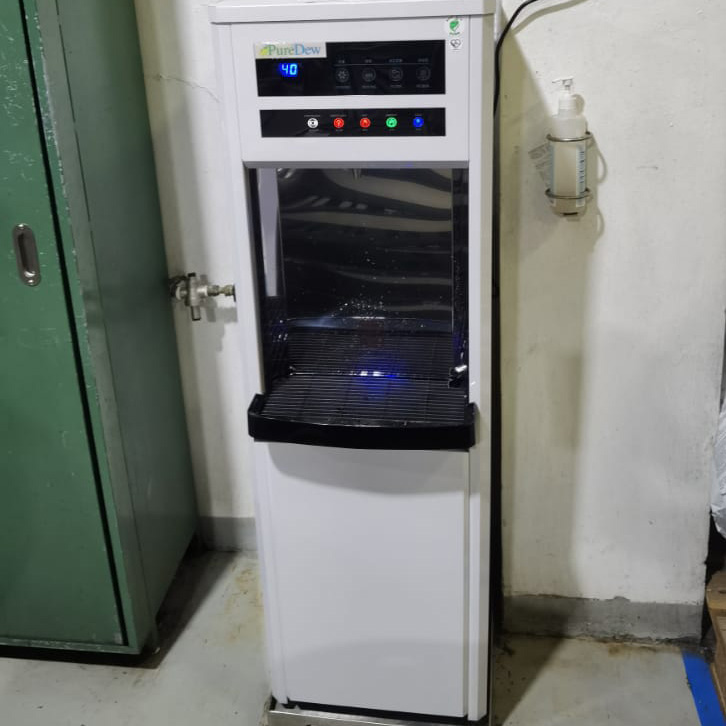
This raises an interesting question: could touchless water dispensers for offices make shared drinking water stations easier to maintain from a hygiene perspective?
Key Takeaways
- Shared water stations can become frequent contact points in busy offices.
- Touch-free dispensers reduce the need to physically handle commonly used buttons, taps or levers.
- Contactless dispensing does not eliminate the need for regular cleaning and maintenance.
- Choosing an office water dispenser involves considering capacity, accessibility, filtration and cleaning requirements.
Why Should Offices Pay Attention to Shared Water Dispensers?
Common workplace facilities experience regular contact throughout the working day. Door handles, pantry appliances, lift buttons and water dispenser controls are among the surfaces employees may touch repeatedly.
Traditional water dispensers often require users to press a button, turn a lever or operate a tap. Although these actions are routine, they create additional shared contact points.In offices with larger teams, these controls may be handled by numerous employees between cleaning sessions.
A touch-free dispenser changes this interaction by allowing users to activate water dispensing without physically operating a shared control. This can reduce one particular source of surface contact in communal spaces. However, it should be viewed as one part of workplace hygiene rather than a complete solution.
How Do Touch-Free Water Dispensers Work?
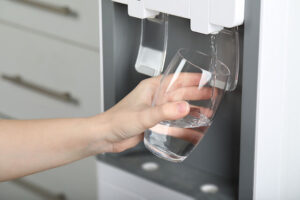
Touch-free dispensers use sensor-based or other contactless activation systems to release water. Depending on the model, users may activate dispensing by,
- Motion sensors- Detecting movement near the dispensing area.
- Proximity sensors- Responding when a bottle or hand is positioned within a designated range.
- Automatic dispensing controls- Releasing water without requiring users to operate a conventional button or lever.
The exact mechanism varies between products. For shared office environments, the practical advantage is straightforward: employees have fewer shared controls to handle during everyday use.
Does Going Touch-Free Mean Better Hygiene Automatically?
Removing the need to touch dispensing controls addresses only one aspect of hygiene. Other parts of a water dispenser still require attention, including,
- Water outlet- The dispensing nozzle should be cleaned according to the manufacturer’s instructions.
- Drip tray- Collected water should be emptied and the tray cleaned regularly.
- External surfaces- Areas around the dispenser may still be touched during bottle refilling.
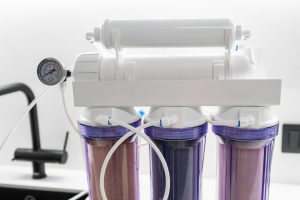
- Internal components- Filters and other components require appropriate servicing and replacement.
Water quality also depends on the dispenser’s filtration system, water source and maintenance condition.
Therefore, businesses should not assume that a touch-free mechanism automatically guarantees cleaner water or eliminates contamination risks.
What Should Businesses Consider When Choosing an Office Dispenser?
A dispenser should suit the practical demands of the workplace, not just its appearance or activation method. Before selecting one, consider,
- Daily usage- Estimate how many employees will use the dispenser and whether its capacity can accommodate peak periods.
- Filtration requirements- Understand the filtration technology, maintenance schedule and replacement filter availability.
- Cleaning accessibility- Check whether the nozzle, drip tray and external components can be cleaned conveniently.
- Sensor responsiveness- Consider whether the dispensing mechanism works comfortably with different bottle sizes and user positions.
- Space availability- Ensure the unit fits the pantry layout without obstructing movement.
- Maintenance support- Check the servicing requirements and availability of replacement components.
For modern offices, where shared pantry facilities may experience frequent use, these considerations can help businesses make a more practical purchasing decision.
Frequently Asked Questions
Are touchless water dispensers more hygienic than traditional dispensers?
They reduce the need to touch shared dispensing controls. However, other surfaces still require regular cleaning, so the overall hygiene depends on maintenance practices.
Do touch-free water dispensers require electricity?
Many sensor-operated models require an electrical supply, although requirements vary by design. Businesses should check the manufacturer’s specifications before purchasing.
Do touchless dispensers need regular servicing?
Yes. Cleaning, filter replacement and component servicing should follow the manufacturer’s recommended schedule.
Can touch-free dispensers accommodate large offices?
Some commercial models are designed for higher usage. Businesses should assess dispensing capacity, water storage and expected daily demand before selecting a unit.
Do touch-free dispensers improve water quality?
Not necessarily. Contactless activation does not determine water quality. This depends on the water source, filtration system and proper maintenance.
Make Workplace Hydration More Considerate
A shared water station should be convenient to use and straightforward to maintain. While touch-free dispensing can reduce contact with commonly handled controls, good cleaning practices and appropriate servicing remain essential.
If your business is reviewing its pantry facilities, explore the range of water dispensing solutions available at Puredew. Consider your workplace requirements and speak with the team about suitable options for your commercial space.
A thoughtfully selected water dispenser can make everyday hydration more convenient while supporting a more considered approach to shared workplace facilities.